


Our Medical Technology
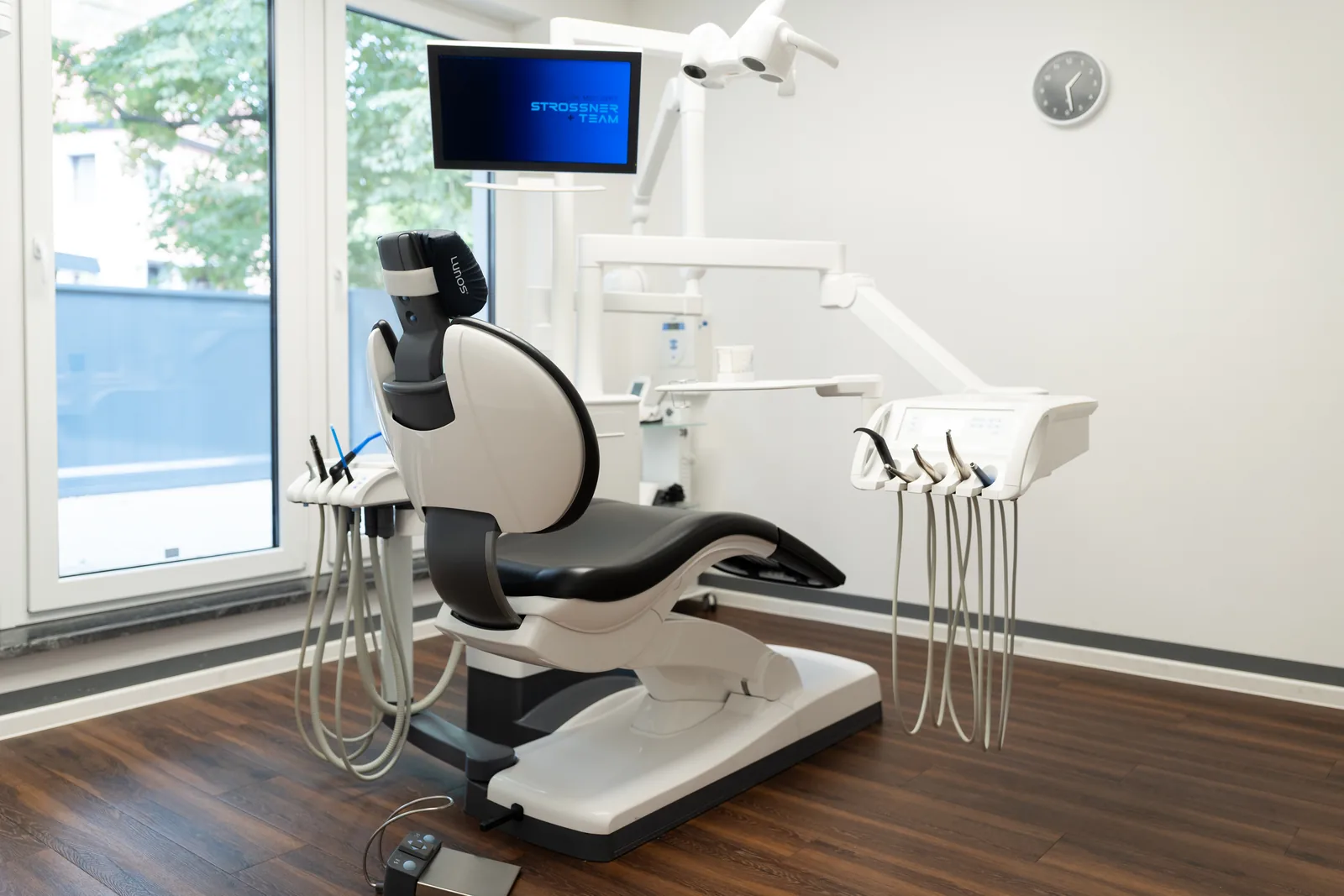
From X-ray to finished tooth, with no detours
For us, digital does not mean “modern for technology's sake” – it means fewer impressions, fewer appointments and fewer surprises.
Who treats you
Dr. med. dent. M.Sc. Sandro Strößner – working in implantology since 2013 · M.Sc. in Oral Implantology and Periodontology – together with the team at Zahnkompetenzzentrum Weißenfels.
First Appointment
Consultation, medical history and examination (3D X-ray if needed) – we plan first and treat later. A pure information meeting without examination is non-binding; the examination and the cost plan are charged according to the GOZ fee schedule.
Costs
A written treatment and cost plan before treatment begins; an initial, non-binding price range is provided by the cost calculator further down.
First Step
Appointments online around the clock (“Appointment” button) or by phone during opening hours on 03443 339 65 54.
“Anyone who has lost teeth wants to be able to bite, laugh and speak again without having to think about it.”
The Principle
Cone-beam CT scan, intraoral scans, structured assessment. The first appointment isn't treatment — it's a conversation backed by data.
From the final dental prosthesis back to the surgery. What should exist at the end determines the first step — not the other way round.
One team under one roof: surgery, prosthetics, laboratory.
Our Medical Technology
For us, digital does not mean “modern for technology's sake” – it means fewer impressions, fewer appointments and fewer surprises.
01
03
05
Whether it's a single tooth, several teeth, or a full arch – we plan every restoration individually. From the initial assessment, through the provisional restoration, to the final dental prosthesis, you stay in the same hands throughout. On request, also under sedation or general anaesthesia.
Short videos in which our team answers the questions we're asked most often. No jargon, no sales pressure.
The videos provide general information and do not replace individual advice or examination. The course and outcome of treatment depend on personal circumstances; medicine offers no guarantee of success. All videos have subtitles.
FUNDAMENTALS
A dental implant is an artificial tooth root that is anchored in the jawbone and replaces a lost tooth in its original position. Unlike bridges or removable dentures, which rely on neighbouring teeth or the mucosa for support, the implant takes on the load-bearing function of the natural root directly in the bone. The visible restoration – a crown, a bridge, or a permanently screwed-in denture – is then attached to this foundation. This makes an implant the closest of all commonly used methods today to the natural structure of a tooth, as it recreates root and crown as two separate, coordinated components.
The implant itself usually consists of biocompatible titanium or high-strength ceramic and generally takes the form of a small screw a few millimetres in diameter. After placement, the jawbone grows firmly onto the surface of the implant – a process known in the profession as osseointegration. Only once this bony healing has been completed to a load-bearing degree is the actual dental prosthesis placed on it. Between the implant and the crown sits a connecting piece, the so-called abutment, which creates the connection and at the same time shapes the transition to the gum.
One key reason for implants is the preservation of the jawbone. A natural tooth root transmits pressure to the bone during chewing and thereby keeps it in shape. If a tooth is missing for a longer period, this stimulus is lost and the bone at that site gradually recedes. An implant can take over this chewing load and counteract bone loss at the affected site – an advantage that mucosa-supported dentures do not offer in the same way.
At the Zahnkompetenzzentrum Dr. med. dent. M.Sc. Sandro Strößner in Weißenfels, we support patients from the initial consultation, through digital planning, to the finished restoration and long-term aftercare. The aim of every treatment is a dental prosthesis that feels as natural as possible when chewing, speaking and smiling, and that blends aesthetically into the existing row of teeth. Because surgery, prosthetics and aftercare come together in one place with us, your treatment can be coordinated by a single provider across all phases.
Implants are not a procedure for a single type of case, but a treatment basis for very different starting situations. From replacing a single tooth to stabilising a complete denture, many gaps can be closed with implant support. Which option is suitable depends on the number of missing teeth, the condition of the remaining teeth and the available bone.
INDICATIONS
Whether an implant is the right solution depends on your individual oral and general health situation. In principle, an implant may be considered when one or more teeth are missing or cannot be saved, and a fixed, independent anchorage in the jaw is desired. Many patients opt for an implant because it spares healthy neighbouring teeth, which would have to be ground down for a conventional bridge.
For implant placement, sufficient bone volume, mucosa free of inflammation, and an overall stable state of health are important. Good oral hygiene and regular check-ups also play a central role, as the surrounding tissue needs to stay healthy in the long term. If the available bone is not sufficient, that does not automatically rule out an implant – the necessary bone volume can often be created with additional augmentation. The contour of the gum and the bite situation are also assessed beforehand, as they help determine the later result.
Certain factors require particularly careful consideration. These include, among others, heavy smoking, poorly controlled diabetes, certain medications, untreated gum inflammation, or nightly teeth grinding. Such factors do not necessarily rule out an implant, but they do influence planning, healing, and aftercare. During your consultation at our practice in Weißenfels, we discuss these openly and honestly, review alternatives, and decide together whether, and in what form, an implant may be suitable for you. For adolescents, it is generally necessary to wait until jaw growth is complete, so that the implant keeps its position.
Your personal expectations matter just as much as the medical prerequisites. Some people want, above all, secure hold when eating; for others, aesthetics in the visible area matter especially; still others want to stabilise a loose denture. We listen, put your wishes into professional context, and show you what is realistically achievable in your situation – without promising anything that could not responsibly be guaranteed in advance.
ABLAUF
Implant treatment is a planned process that extends over several appointments and weeks. Each step builds on the previous one, and deliberately chosen healing periods, during which the tissue settles, lie between the individual phases. The following overview shows the typical course – the exact sequence and duration always depend on your personal situation and may vary in individual cases.
In certain starting situations, steps can be combined – for example, when the implant and the temporary restoration are provided close together in time. Whether such a shortened approach is suitable for you depends on the bone quality, the stability achieved by the implant and its position in the jaw, and is carefully assessed in each individual case.
You remain closely involved throughout the entire treatment. Before every major step, we explain what happens next, what to look out for at home, and when the next appointment makes sense. This way, you keep an overview of the process and know exactly which phase of your treatment you are currently in.
TECHNOLOGY & MATERIAL
Forward-looking planning is the foundation of good implant treatment. The more precisely the structure of the jawbone is known in advance, and the more precisely the course of important structures such as nerve canals or the maxillary sinus is known, the more precisely the implant position can be determined. To achieve this, we rely on modern imaging and digital planning methods, which make treatment more predictable and easier to follow.
With 3D X-ray (cone-beam CT), the jaw can be assessed spatially rather than just as a flat image. This reveals bone height, bone width and the position of anatomical structures that are only partially visible on a classic two-dimensional X-ray. This information helps to plan the implant at a site where enough load-bearing bone is available and sensitive neighbouring structures can be protected. The need for bone augmentation can also be realistically assessed on this basis.
Based on the three-dimensional data, the planned implant position can be transferred into a so-called surgical guide. This individually made guide is fitted onto the teeth or jaw during the procedure and guides it along the previously determined axis and depth. This approach combines digital planning on screen with implementation in the mouth and supports precise, well-documented treatment. Even before the procedure, it is possible to take into account what the later dental prosthetics should look like and how they will be loaded, so that the implant is positioned not only favourably for surgery, but also sensibly for prosthetics.
Two materials are mainly available for the implant itself. Titanium implants have been in use for decades and are known for their good tolerability and mechanical strength. They are the most commonly used material and are used in most situations. Ceramic implants – usually based on zirconium dioxide – are metal-free and naturally tooth-coloured, which can offer aesthetic advantages, especially in the visible front-tooth area or where the gum is very thin.
Which material suits you depends on several factors: the location of the gap, the aesthetics you want, the available bone, the bite situation, and your personal preferences. Some patients prefer a metal-free solution for personal reasons; for others, the long-proven strength of titanium is the priority. During your consultation, we explain the properties of both materials factually and discuss which option may be suitable in your case – there is no single best solution overall, only one that suits you individually.
ADVANTAGES & BONE AUGMENTATION
The points below summarise why implants can be a convincing solution in many cases – always provided the individual circumstances are right.
An implant needs sufficient load-bearing bone in order to be anchored securely. However, after a tooth has been missing for a longer period, the jawbone often recedes, because it no longer receives natural stimulation from the tooth root. Inflammatory processes or anatomical factors can also mean that there is not enough bone at the desired site. In such cases, bone augmentation can restore the missing volume, thereby first creating the conditions needed for an implant.
Depending on its extent, bone augmentation can be carried out at the same time as implant placement, or as a separate, preliminary procedure. If it is carried out separately, the augmented area first needs its own healing period before the implant is placed. Whether bone augmentation is needed at all can only be assessed after a precise examination – in many cases, the available bone is sufficient. Where it is not, the procedures described often still open the way to an implant. At our practice in Weißenfels, we discuss transparently what additional effort this involves and how it affects treatment duration and cost.
RISKS & AFTERCARE
Like any surgical procedure, placing an implant carries certain risks, which we explain to you in detail before treatment. In the first few days after the procedure, swelling, a feeling of tightness, or temporary sensitivity may occur – reactions that are part of the normal wound-healing process. With clear guidance on what to do, good oral hygiene, and attentive aftercare, such symptoms can generally be well managed. You will also receive specific advice on cooling, diet, and taking it easy physically during the first few days.
Possible risks include secondary bleeding, impaired wound healing, inflammation, or, rarely, an effect on neighbouring structures such as nerves or the maxillary sinus. If bony integration fails to occur, an implant may, in individual cases, not fuse firmly and may need to be removed. Careful planning with three-dimensional diagnostics, a gentle approach during the procedure, and following aftercare instructions all help keep such risks as low as possible. We tell you specifically which points are relevant in your case.
Healing of the gum wound generally takes place within a few days to around two weeks. Bony integration – osseointegration – takes considerably longer and generally extends over several weeks to a few months, depending on the jaw and bone quality. In the lower jaw, the bone is often denser and tends to integrate more quickly than in the upper jaw. If bone augmentation has been carried out, the overall duration extends accordingly, because the augmented area also needs time to mature. This time is well invested, as it creates the stable foundation for the later restoration.
To ensure that an implant can remain in the mouth for as long as possible, thorough daily oral hygiene and regular check-ups are crucial. Inflammation of the tissue around the implant – peri-implantitis – is the most common late complication and can be made less likely through consistent care and professional dental cleaning. We show you how to care for your implant at home, which aids are suitable for the spaces between teeth and how often check-up appointments at our practice in Weißenfels make sense. A short period of getting used to the new cleaning routine is normal.
COSTS & REGION
The cost of implant treatment depends on many factors: the number of implants, the material used, the type of dental prosthesis, and whether bone augmentation or other preliminary treatment is needed. For this reason, no flat-rate price can be given. Before treatment begins, we provide you with a written, comprehensible treatment and cost plan listing every item, so that you have a clear basis for your decision.
We understand that the financial side of implant treatment plays an important role. That's why we discuss together which treatment makes medical sense while also fitting your means, and explain the treatment and cost plan item by item. On request, we also discuss possible payment arrangements, so the treatment remains easy to plan for.
Statutory health insurers pay a fixed subsidy for dental prosthetics based on the diagnosis, calculated against standard care. As the implant itself usually goes beyond standard care, an out-of-pocket share generally remains. Keeping a bonus booklet regularly and without gaps can increase the subsidy. Privately insured patients and those with supplementary insurance should clarify reimbursement with their insurer in advance, as conditions vary by tariff. We are happy to prepare a treatment and cost plan for you that you can submit to your health insurer before treatment begins – simply get in touch with us on 03443 / 339 65 54.
The Zahnkompetenzzentrum Dr. med. dent. M.Sc. Sandro Strößner is here for patients in Weißenfels. The practice is easy to reach from towns in the Burgenlandkreis such as Hohenmölsen, Lützen, Teuchern, Naumburg and Zeitz, as well as from neighbouring Bad Dürrenberg (Saalekreis) and the surrounding communities. Diagnostics, planning, the surgical procedure, prosthetic treatment and aftercare all take place at a single location, so that your treatment is coordinated in one place and you do not have to switch between several practices.
If you are considering an implant, or are unsure which restoration is right for you, a personal consultation is the best first step. During this, we look at your situation, answer your questions and show you the possible options – objectively, clearly and without time pressure. Feel free to book an appointment by telephone on 03443 339 65 54. We take time for your concerns and support you on the way to your dental prosthetics.

Anyone who has lost teeth wants to be able to bite, laugh and speak again without thinking about it. Dental implants are a high-quality solution for this – biomechanically modelled on the natural tooth and durable for many years with good care and aftercare. At our Zahnkompetenzzentrum in Weißenfels, Dr. med. dent. M.Sc. Sandro Strößner has been placing implants since 2013.
We work with 3D diagnostics (cone-beam CT), a digital surgical guide and navigated surgery. Depending on the available bone, we place titanium or ceramic implants, with bone augmentation (augmentation, sinus lift) where necessary.
What convinced me was the absence of marketing. No promises. Just planning, explanation, execution. I had eight implants placed and didn't even feel like I'd made a difficult decision.
At the Zahnkompetenzzentrum
Book a consultation
Straight to consultation, no detours
about 40 minutes by car (A9)
All Services at a Glance
No-Obligation Cost Calculator
Process, Technique, Immediate Treatment
Upload your cost plan, call-back within two working days
Computer-navigated implant placement in real time. See how an implant procedure takes place at our Zahnkompetenzzentrum.
This video contains no spoken content. The audio track consists solely of subtle background music — no spoken or meaning-bearing audio information is lost.
Answer a few short questions and you’ll immediately receive a transparent price range for your situation — complete with a clear breakdown and possible monthly instalment.
As a rule X-Guide 3D-navigated & minimally invasive. We plan your implant on the computer and, as a rule, place it with navigation to within a millimetre — through a particularly small, tissue-sparing access point. This extra effort is already built into every price.
You now know your approximate investment. In the information consultation we clarify which restoration makes sense for your case – and whether there might be a simpler way.
A no-obligation information meeting, without treatment. Examination, any necessary X-ray diagnostics and the written treatment and cost plan are carried out according to medical indication and charged under the GOZ; we tell you the costs in advance. You decide at your leisure.
A non-binding estimate for initial guidance only — not a treatment and cost plan, and no substitute for a personal consultation. The actual cost depends on your individual findings and is set out in a written treatment and cost plan showing the expected costs.
Get practical dental health tips and news from our practice — free, and you can unsubscribe at any time.
